A few years ago, nobody would have imagined that a chocolate bar from Dubai could become one of the most talked-about food products on the internet. Yet that is exactly what happened. What began as a local confection quickly transformed into a global phenomenon, appearing across social media feeds, airport duty-free shops, influencer videos, and food blogs around the world.
At roughly the same time, another food story was continuing its quiet rise. Unlike Dubai Chocolate, however, this one was not built on viral videos or luxury packaging. Instead, it had spent decades slowly making its way into international kitchens, restaurants, supermarkets, and daily diets. That food was kimchi.
The real question is not whether kimchi tastes better than Dubai Chocolate or vice versa. Rather, it is whether Dubai’s most famous food sensation can achieve the same lasting global influence that kimchi has already established.
How Dubai Chocolate Became More Than Just Chocolate
The remarkable thing about Dubai Chocolate is that its popularity was never driven solely by flavour. Certainly, the combination of chocolate, pistachio, and crispy textures helped attract attention. However, many delicious products never become global talking points.
What truly elevated Dubai Chocolate was the story surrounding it. The product arrived at a time when social media increasingly rewarded visually appealing experiences. People were not simply buying chocolate. They were buying into an idea of Dubai itself: luxury, excess, innovation, and indulgence.
As a result, Dubai Chocolate became something larger than a food product. For many visitors, purchasing it became part of the Dubai experience in the same way that visiting the Burj Khalifa or exploring the city’s malls had become. Tourists carried boxes home as gifts. Influencers filmed elaborate taste tests. International retailers began producing their own versions in an attempt to capture some of the excitement.
Consequently, the product achieved something that very few food items manage to accomplish. It became associated with an entire city.
The Challenge Facing Every Viral Food Trend
However, viral popularity creates a problem that is often overlooked.
History shows that many food trends enjoy explosive success before gradually fading into the background. The reason is simple. Attention is not the same thing as habit. Millions of people may try a product once because it is fashionable, but long-term success requires something deeper. It requires people to return repeatedly, even after the excitement has disappeared.
This is where many food trends struggle. Their popularity depends heavily on novelty. Once the novelty fades, consumers move on to the next trend.
Therefore, the true test for Dubai Chocolate is not whether it can continue generating headlines today. The more important question is whether people will still be actively seeking it five, ten, or twenty years from now.
That challenge is considerably harder.
Why Kimchi Represents a Different Kind of Success
Unlike Dubai Chocolate, kimchi did not become famous through a sudden burst of attention. Its journey was slower, quieter, and arguably more impressive.
For generations, kimchi remained primarily associated with Korean households and traditional cuisine. However, as Korean culture expanded globally through music, television, cinema, fashion, and food, kimchi travelled alongside it. Gradually, international consumers became familiar with its flavour, its health benefits, and its cultural significance.
As this happened, kimchi moved beyond curiosity and became routine.
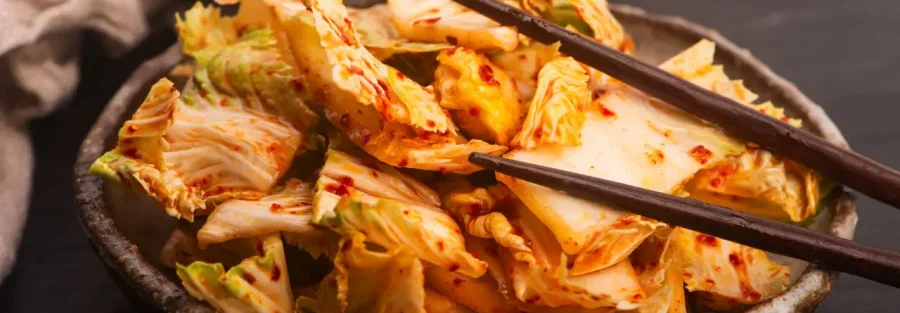
Today, people purchase kimchi not because it is fashionable but because it has become part of their regular eating habits. It appears in supermarkets across Europe, North America, the Middle East, and Asia. Restaurants incorporate it into menus far beyond Korean cuisine. Health-conscious consumers seek it out for its probiotic qualities.
In other words, kimchi no longer depends on attention. It depends on demand.
That distinction is extremely important because demand tends to survive much longer than excitement.
The Power of Culture Behind Food
One reason kimchi has enjoyed such longevity is that it is supported by something larger than itself.
Whenever people discover Korean dramas, Korean music, Korean fashion, or Korean beauty products, they often become curious about Korean food as well. Kimchi therefore benefits from an entire cultural ecosystem that continuously introduces new audiences to Korean traditions.
Dubai Chocolate operates differently.
At present, much of its appeal remains connected directly to the product itself and the city that inspired it. While Dubai certainly enjoys enormous global recognition, the product is still relatively young compared to food traditions that have spent decades establishing themselves internationally.
This does not mean Dubai Chocolate cannot achieve similar success. It simply means the journey is only beginning.
Could Dubai Chocolate Become a Permanent Global Product?
The answer depends on what happens next.
If Dubai Chocolate remains primarily a tourist purchase or social media trend, then its influence may eventually plateau. People will continue buying it during visits to Dubai, but its presence in everyday life elsewhere may remain limited.
However, if manufacturers continue innovating, expanding distribution, and embedding the product into global consumer habits, the story could become very different. Many products that began as local specialties eventually transformed into international staples because businesses successfully moved them from occasional purchases to regular consumption.
Achieving this requires patience. Cultural exports rarely become permanent overnight. Even kimchi required decades to reach its current position.
Therefore, the question is not whether Dubai Chocolate can match kimchi’s influence today. It clearly cannot.
The more interesting question is whether it can begin building the foundations that allow it to compete twenty years from now.
Final Thoughts
When people ask whether kimchi will defeat Dubai Chocolate, they are actually comparing two completely different stages of success.
Kimchi represents what happens when a food product survives long enough to become embedded within global culture. Its popularity is supported by habit, tradition, and everyday consumption.
Dubai Chocolate represents something else entirely. It represents momentum, attention, and the remarkable ability of a city to create a product that captures global imagination almost overnight.
At present, kimchi holds the stronger long-term position because it has already proven its staying power. Yet Dubai Chocolate possesses something that every successful cultural export requires at the beginning of its journey: curiosity.
The future will determine whether that curiosity develops into habit.
Until then, the battle remains less about food and more about time. Kimchi has already survived generations. Dubai Chocolate is only just beginning its story.