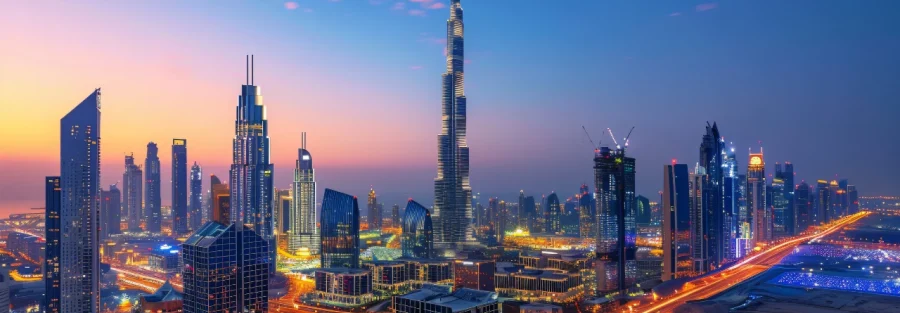
The skyline of the United Arab Emirates tells a story of ambition. Towering glass buildings reflect sunlight by day and global success by night. Cities like Dubai and Abu Dhabi have become symbols of rapid growth, innovation, and opportunity.
But behind this visible success lies another story, one that is less often told.
A story of the people who build, maintain, and sustain these cities.
The Foundation Beneath the Skyline
The UAE’s economic rise has been remarkable. Its workforce has expanded rapidly, reaching over 9 million people, with one of the lowest unemployment rates globally.
However, what makes the UAE unique is not just the scale of growth, but the structure of its workforce. Around 95 percent of the private sector workforce consists of expatriates, forming the backbone of industries such as construction, hospitality, logistics, and services.
In the construction sector alone, there are over 1.8 million workers, the majority of whom are migrants.
These individuals come from across South Asia and beyond, bringing with them not just labor, but aspirations. For many, the UAE represents opportunity, stability, and a chance to support families back home.
Visible Growth, Invisible Contribution
Modern skylines are often celebrated as symbols of progress. Yet, the human effort behind them remains largely unseen.
The workers who build these structures operate in environments that are physically demanding and often far removed from the polished corporate spaces they help create. Their lives rarely intersect with those who occupy the upper floors of the very buildings they construct.
This contrast is not unique to the UAE, but it is particularly visible here due to the pace and scale of development.
The phrase “Glass Towers, Invisible Lives” captures this dual reality. One part is highly visible, documented, and celebrated. The other exists quietly, supporting the system without recognition.
A System Built on Mobility
The UAE’s success is closely tied to its ability to attract global talent at every level. From senior executives to skilled technicians and frontline workers, the country operates as a dynamic, multinational ecosystem.
Migrant workers account for a significant majority of the population, making the UAE one of the most globally diverse labor markets.
This mobility brings flexibility and efficiency. Businesses can scale quickly, projects can move at speed, and the economy remains competitive.
At the same time, this structure creates a workforce that is often temporary by design. Many individuals live and work in the UAE for defined periods, with their long-term stability tied to employment contracts.
This raises important questions about continuity, belonging, and long-term workforce sustainability.
Progress and Responsibility
It is important to acknowledge that the UAE has introduced several reforms to strengthen labor protections and improve working conditions.
Initiatives such as the Wage Protection System now cover millions of workers, ensuring timely salary payments and greater transparency.
Labor dispute resolution mechanisms have also improved, with thousands of cases being addressed annually through formal channels.
Additionally, broader economic reforms have contributed to a more structured and regulated labor market, enhancing both employer accountability and worker protection.
These developments reflect a growing recognition that sustainable growth must include not only infrastructure and investment, but also human welfare.
The Business Perspective
For organizations operating in the UAE, this topic is not just social, it is strategic.
Human capital is a critical component of operational success. Companies that prioritize workforce well-being, ethical practices, and fair systems are better positioned to manage risk, maintain productivity, and build long-term resilience.
Ignoring the human dimension can lead to reputational challenges, operational disruptions, and compliance risks.
On the other hand, organizations that integrate responsible practices into their core operations often experience stronger employee engagement, improved retention, and enhanced brand credibility.
Conclusion
The UAE stands at an important point in its journey. It has already established itself as a global hub for business, innovation, and talent.
The next phase of growth will likely be defined not just by how high buildings rise, but by how inclusive and sustainable the systems behind them become.
“Glass Towers, Invisible Lives” is not a criticism of progress. It is a reminder of its full picture.
Because every skyline tells two stories. One that is seen, and one that is lived.
Recognizing both is essential to building a future that is not only successful, but also balanced and responsible.