There is a version of Dubai that a lot of people never got to see, and an even larger number who saw it but can barely remember what it felt like anymore. Before the skyline became a global brand and the city turned into a destination that needed its own orientation manual, Dubai was a remarkably simple place to live. It had its rhythms, its familiar corners, and its unspoken rules that everyone just understood. The transformation did not happen slowly either, one decade the city was a tight-knit community of traders, expat families, and local businesses clustered along the Creek, and the next it was a sprawling metropolis where your commute took longer than your workday.
When the Whole City Fit Between Two Neighbourhood
For anyone who lived in Dubai before the early 2000s, the geography of daily life was remarkably contained. Deira sat on one side of the Creek and Bur Dubai on the other, and between them they held just about everything a person could need. Your office was likely in one, your apartment in the other, and the abra ride connecting the two was not a tourist attraction but an actual commute.
Deira in particular had a character that is hard to explain to anyone who only knows it as the “old part” of the city. It was loud, cluttered, and full of signage in every language imaginable, and it worked beautifully precisely because nobody was trying to curate it. The electronics shops on Al Fahidi Street, the spice traders who could identify what you needed before you finished describing it, the tailors who remembered your measurements from three years ago, all of it ran on relationships and reputation rather than marketing budgets and franchise agreements. Bur Dubai had its own version of the same energy, particularly around the textile souk and the narrow streets behind the Grand Mosque, where entire communities had built their routines around specific shops and specific chai stalls that never needed a Google Maps listing because everyone already knew where they were.
What tied it all together was the fact that Dubai felt knowable. You could hold the entire city in your head, running into someone you recognised was not unusual, and there was a warmth in that social density which is genuinely hard to replicate in the Dubai of today.
How Malls Quietly Replaced Your Entire Social Life
The arrival of the mega-mall did not just change where people shopped, it changed where people met, where teenagers had their first taste of independence, where families spent their only day off, and where entire friend groups-built years of shared memories. The earlier malls like Lamcy Plaza, BurJuman, and City Centre Deira were manageable. You went, bought what you needed, maybe had a meal at the food court, and went home.
The newer generation swallowed everything. They became the evening walk, the weekend plan, the birthday venue, and the default answer to “what should we do today?” in a way that gradually erased the alternatives. Parks, corniche walks, neighbourhood strolls, all these still existed technically, but the summer heat gave malls a permanent advantage, and over time the habit became the lifestyle. The strangest part was how willingly everyone accepted it, with no mourning period for the street-level social life that was quietly disappearing until someone mentioned a chai stall or a neighbourhood shop that no longer existed and the room went briefly, uncomfortably quiet.
The Souks You Remember vs the Heritage You Are Sold
The Gold Souk, the Spice Souk, the Textile Souk these were not attractions. They were infrastructure, where people went to buy things they needed, and the experience was shaped entirely by the fact that they were functioning commercial spaces rather than curated photo opportunities.
Walk through them today and something feels different. The bones are still there. the narrow lanes, the wooden archways, the traders calling out, but where the souks once hummed with genuine commerce, they now carry the slightly awkward self-awareness of a place that knows it is being preserved rather than lived in. What was once “what do you need?” has become “welcome, come look, very nice for a souvenir.” Meanwhile, heritage villages and cultural districts have sprung up across the city, all well-intentioned and often beautiful, but incapable of capturing what made the originals special. You cannot manufacture the feeling of a grandmother haggling over fabric while her grandchildren run between the stalls. You cannot design the smell of a spice souk at midday in August. These were not aesthetic choices, they were the natural by-products of a living ecosystem, and no amount of restored architecture can bring them back once that ecosystem has moved on.
What Stays and What Fades
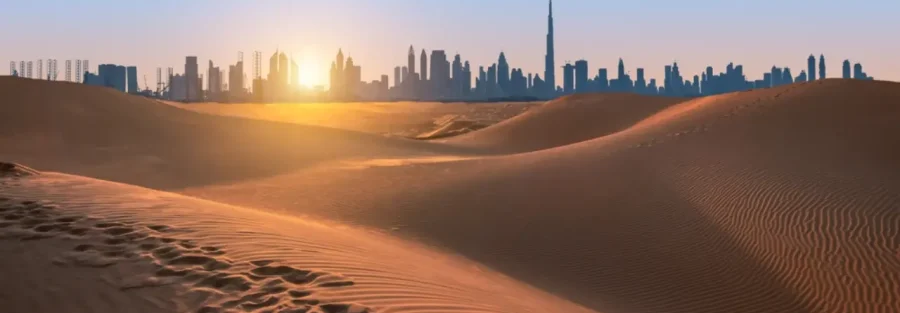
The truth about Dubai’s nostalgia is not about missing old buildings or cheaper rent. It is about missing a time when the city felt small enough to belong to you, when you could walk into a shop and be greeted by name, when the skyline was low enough to see the sunset properly, and when the whole place felt like a shared secret rather than a global spectacle. That version of Dubai is not coming back, and everyone who lived through it knows this. But the fact that they still talk about it, still light up when the memories surface, tells you something important about what the city meant to them before it became what it means to the world.