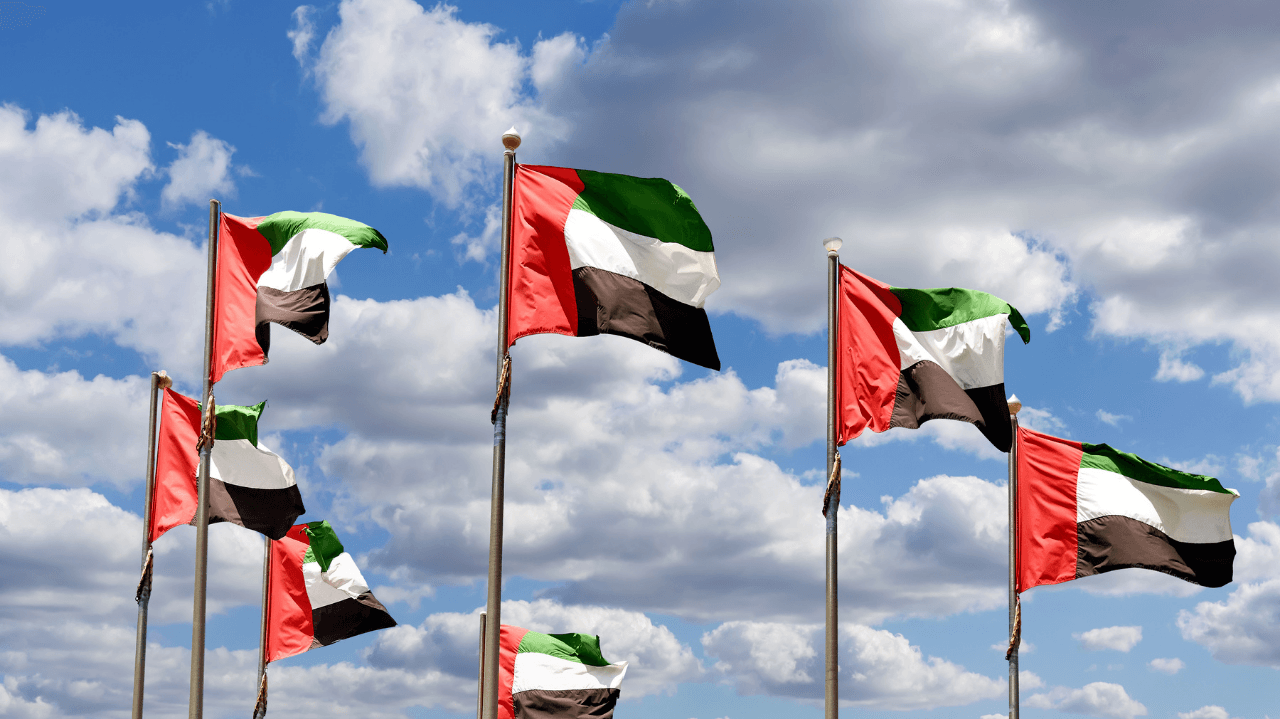
At first glance, the United Arab Emirates can seem like a single, highly centralised country. It has one flag, one currency, one federal government and one President. But beneath that unified identity is a distinctive political structure built around seven emirates, each with its own ruler, government and local priorities.
So, who really runs the UAE?
The answer is more interesting than simply naming the President or Prime Minister. The UAE operates through a balance between federal leadership and the individual authority of its seven emirates. Understanding that structure helps explain not only how the country is governed, but also why Abu Dhabi, Dubai and the other emirates can develop such different economic and social identities while remaining part of one federation.
Seven Emirates, One Federation
The UAE was established on 2 December 1971, bringing together Abu Dhabi, Dubai, Sharjah, Ajman, Umm Al Quwain and Fujairah. Ras Al Khaimah joined the federation in February 1972. Today, these seven emirates form the United Arab Emirates.
Each emirate has its own hereditary ruler and local government. At the same time, the country has federal institutions responsible for matters that affect the UAE as a whole.
This creates a two-level system of governance. Local governments manage many affairs within their respective emirates, while the federal government handles national responsibilities such as foreign affairs and other areas defined by the Constitution.
It is this combination of local authority and federal coordination that makes the UAE's model distinctive.
The Seven Rulers at the Centre of Power
The most important institution in understanding the UAE's political structure is the Federal Supreme Council.
The Council consists of the rulers of the seven emirates and serves as the highest constitutional authority in the country. It establishes general policies and approves important federal legislation.
This means the seven rulers are not simply regional leaders operating independently. Collectively, they form the country's highest constitutional body.
Each emirate therefore has a direct place within the UAE's federal decision-making structure.
This is particularly significant when considering the different economic strengths of the emirates. Abu Dhabi is the largest emirate by area and has a major role in the national economy. Dubai has developed into a global centre for trade, tourism, finance and business. Sharjah has built a strong cultural and educational identity, while other emirates have developed around industries including manufacturing, tourism, logistics and agriculture.
The federation allows these different identities to coexist within one national framework.
So, Who Is the President?
The UAE does have a President.
As of 2026, Sheikh Mohamed bin Zayed Al Nahyan is President of the UAE and Ruler of Abu Dhabi. He assumed the presidency on 14 May 2022 following the passing of Sheikh Khalifa bin Zayed Al Nahyan.
However, the position is not simply inherited automatically through a direct national election. Under the Constitution, the Federal Supreme Council elects the President from among its members for a five-year term, with the possibility of re-election.
This illustrates an important feature of the UAE system. The country's national leadership is closely connected to the rulers of the individual emirates.
And What About the Prime Minister?
The UAE also has a Prime Minister.
Sheikh Mohammed bin Rashid Al Maktoum, who is the Ruler of Dubai, currently serves as Vice-President and Prime Minister of the UAE. The Prime Minister's position is constitutional, with responsibilities related to the federal government and Cabinet.
This creates an interesting leadership structure. The President is the country's head of state, while the Prime Minister leads the federal government as head of government.
Both positions are closely connected to the leadership of two of the UAE's most influential emirates, Abu Dhabi and Dubai.
Why Does This Structure Matter for Business?
The UAE's political structure is not simply a matter of constitutional interest. It has practical implications for businesses and investors.
Companies operating in the UAE often need to understand both federal regulations and the specific rules, institutions and economic priorities of the emirate in which they operate.
That local dimension can also create opportunities.
Abu Dhabi, for example, has been rapidly expanding its economy beyond traditional hydrocarbons. In 2024, its GDP reached approximately AED 1.2 trillion, while non-oil activities accounted for 54.7% of total economic output. The emirate's population also reached 4.14 million, representing a 51% increase over the previous decade.
Dubai, meanwhile, continues to operate with its own local government structures while playing a major role in the wider UAE economy.
For international businesses, this means that "the UAE market" is not always a single, uniform market. Understanding the differences between the emirates can be just as important as understanding the country as a whole.
More Than Seven Rulers
The UAE's governance model reflects a broader idea: unity does not necessarily require uniformity.
Seven emirates retain their own leadership, institutions and economic character, yet participate in a common federal system. The President and Prime Minister provide national leadership, while the rulers remain central to the governance of their individual emirates.
This balance has helped the UAE build a strong national identity without eliminating the distinct character of its constituent emirates.
For businesses, investors and international observers, understanding this structure offers more than political knowledge. It provides a clearer picture of how decisions are made, why each emirate can pursue different development priorities, and how local and federal interests come together.
The UAE's story is therefore not simply about one government running seven emirates. It is about seven centres of local leadership building one national vision.
That may be one of the most important reasons the UAE has been able to combine regional identity with an increasingly global outlook.